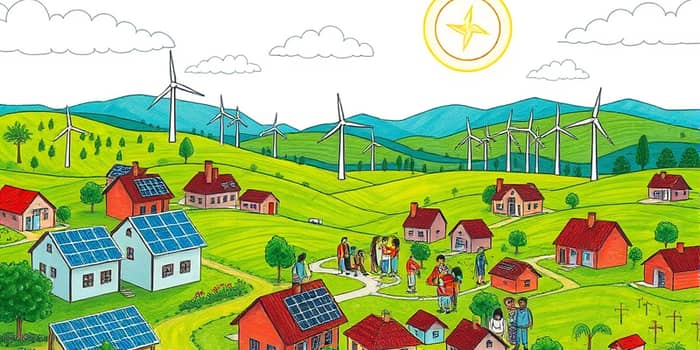
Across the globe, communities are rewriting the rules of energy production. No longer passive consumers, citizens are becoming active stewards of resilient, renewable power. This shift promises a future where clean energy is not only accessible but also locally governed, creating both environmental and social dividends.
In this article, we explore how decentralized energy systems can deliver on climate goals, boost local economies, and empower communities to invest in a greener tomorrow. Discover practical pathways to overcome barriers and finance transformative projects at the neighborhood level.
Decentralized energy refers to small-scale power generation and storage located close to demand, replacing reliance on a few massive power plants. Whether connected to the main grid, operating as microgrids, or standing fully off-grid, these systems bring control back to local actors.
Coupled with smart inverters, sensors, and IoT-based controls, decentralized solutions are modular, scalable, and rapidly deployable. From a single rooftop installation to a network of solar gardens, communities can tailor energy systems to their unique needs.
By integrating decentralized renewable energy resources like solar, wind, hydro, and biomass, communities drastically reduce greenhouse gas emissions. Generating power on-site cuts transmission losses and accelerates progress toward net-zero targets.
When central grids fail due to storms or technical faults, decentralized networks enhance resilience to disasters and grid failures. Local microgrids can island themselves, maintaining critical services like hospitals, water treatment, and communication hubs.
Beyond climate and resilience, projects anchored in sustainable local economic development and jobs deliver lasting prosperity. From manufacturing components to installation and maintenance, decentralized systems spark new career pathways and keep energy spending within the community.
Investment is shifting toward more distributed models, yet high upfront costs and fragmented project sizes remain hurdles. In Indonesia, for example, only 2% of the funds required for nationwide electrification and renewable targets arrive from public coffers, leaving a significant investment gap to close.
Attracting private capital demands innovative approaches that share risk, reduce transaction costs, and aggregate small projects into bankable portfolios. Blended finance, guarantees, and impact investing can mobilize broader pools of funding.
Regulatory complexity often stifles innovation. Simplifying permitting, standardizing interconnection rules, and enabling microgrids and local energy communities to sell excess power are critical steps. Clear net-metering policies and robust consumer protections will build investor confidence.
On the financial side, local banks must be encouraged to underwrite smaller-scale projects. Establishing credit lines, reducing interest rates, and de-risking loans through guarantees can lower costs and broaden access. Collaborative support from development finance institutions accelerates market development.
Technological enablers like advanced metering, peer-to-peer trading platforms, and predictive analytics strengthen system performance. Capacity-building programs ensure communities can operate and maintain assets long-term.
Communities can take action now by following these practical steps to turn vision into reality.
Decentralized energy is more than a technological shift—it’s a movement for community-driven climate action and social equity. By pooling resources and expertise, local actors can build robust energy systems that deliver affordable, reliable, and clean power.
Every neighborhood that embraces this model becomes a beacon of possibility. Together, we can empower communities to invest in their own futures, forging a sustainable energy landscape that lights the way for generations to come.
References