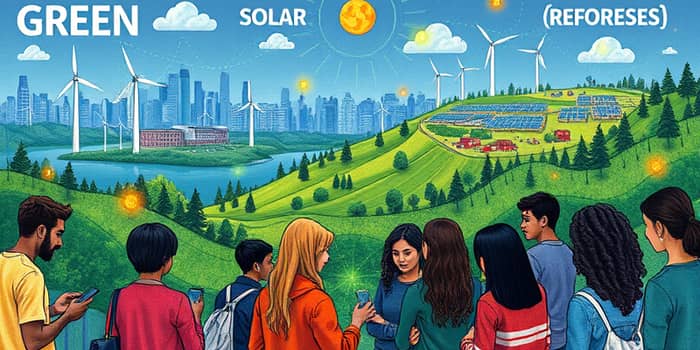
The scale of the climate crisis demands innovation not only in technology and policy but in how we finance the transition to a low-carbon future. Traditional financial systems struggle with high costs, limited transparency, and barriers to entry for smaller investors and underserved communities. Climate fintech emerges at the intersection of environmental goals, financial services, and digital technology to tackle these challenges head-on.
By leveraging blockchain, mobile payments, data analytics, and AI, this new wave of financial innovation promises to make green capital easier to access, distribute, verify, and invest in. Yet the path forward is not without tensions: regulatory gaps, data integrity issues, and the risk of overlooking local needs all temper the optimism around this field.
At its core, climate fintech refers to digital financial tools that help channel money into projects and services that mitigate or adapt to climate change. It encompasses:
This broad scope unites any technology-enabled innovation in financial processes designed with explicit environmental aims, from sustainable asset management to decentralized carbon markets.
Global estimates place annual investment needs for mitigation and adaptation in the trillions, yet traditional finance channels are closing the gap too slowly. Public budgets are stretched, and institutional investors demand reliable data and transparent structures before deploying capital.
Lower costs, faster screening, and improved transparency are not just buzzwords—they are prerequisites to mobilize the scale of private finance required. Fintech solutions can reduce paperwork, automate compliance, and provide real-time monitoring of environmental impact. This speed and efficiency are vital when every month of delay can translate into missed climate targets.
Practical applications of climate fintech illustrate its transformative potential:
Climate fintech can truly broaden participation when it addresses the structural barriers that exclude many from climate investment opportunities. It achieves this by:
When communities and small businesses can access affordable capital, they can launch renewable projects, upgrade infrastructure, and build resilience against climate impacts. This amplifies local ownership and empowerment, turning passive stakeholders into active participants in the green transition.
No innovation is without risk. Climate fintech’s reliance on digital tools can create blind spots:
Automated screening based solely on satellite imagery or AI models may overlook nuanced social and ecological factors on the ground. Without strong standards, carbon offset tokenization can become another avenue for greenwashing rather than genuine emissions reduction.
Furthermore, many low-income regions still lack the digital infrastructure—reliable internet, ID systems, mobile coverage—to fully benefit from climate fintech. Without intentional design and inclusive regulation, these tools risk reproducing existing inequalities rather than dismantling them.
PAYGO solar platforms exemplify both the potential and the tensions of climate fintech. In East Africa and South Asia, companies combine off-grid solar hardware with mobile money apps. Households pay small sums daily or weekly, unlocking access to clean energy and replacing kerosene lamps.
This model lowers the upfront cost barrier and improves quality of life, health, and productivity. Yet critics warn that remote monitoring and investor-driven targets can overshadow local needs, labor conditions, and long-term community ownership. The success of PAYGO hinges on balancing scale with sensitivity to social and ecological contexts.
To realize the full promise of climate fintech, governments and regulators must craft frameworks that support innovation while safeguarding investors, consumers, and communities.
Regulators should define clear standards for environmental claims, data reporting, and digital identity. Cross-border coordination on carbon markets and fintech licenses can reduce fragmentation and spur greater private capital flows into climate solutions.
Climate fintech stands at a pivotal moment. Its ability to lower barriers and spark innovation can unlock trillions in green capital, drive rapid decarbonization, and make resilience investments accessible to those who need them most.
Success requires collaboration among technologists, financiers, policymakers, and, above all, the communities whose lives and livelihoods depend on equitable, climate-smart solutions. By marrying cutting-edge digital tools with inclusive design and robust oversight, we can ensure that climate fintech fulfills its promise: a truly democratized path to a sustainable future.
References