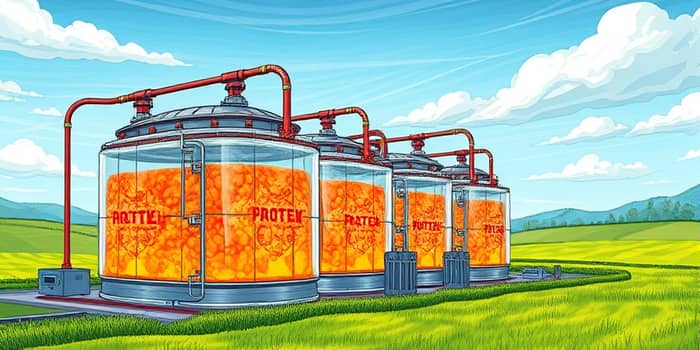
In the face of climate change, population growth, and resource limits, the global food system demands novel solutions. Precision fermentation stands out as a platform technology with great potential to transform food supply chains, unlock sustainable proteins, and attract impactful investment.
By harnessing microbes as tiny cell factories, this approach decouples protein production from livestock, land, and climate constraints. From lab benches to commercial bioreactors, precision fermentation is reshaping how we think about food, health products, and beyond.
At its core, precision fermentation leverages genetically engineered microbes—yeast, bacteria, or fungi—to produce a targeted molecule with unmatched purity. Unlike traditional fermentation that yields a mixture of compounds, precision fermentation focuses on one single molecule per batch.
This process is divided into upstream processing (strain development and cultivation) and downstream processing (extraction and purification). Advanced sensors and AI-driven models continuously monitor pH, dissolved oxygen, and cell density to maximize yield and efficiency.
Precision fermentation’s versatility extends far beyond dairy alternatives. It produces proteins like casein and whey for animal-free cheese, collagen for cosmetics, and therapeutic enzymes for biopharma.
Key applications include:
Products using precision fermentation already appear on shelves, from cheeses made with fermentation-derived rennet to pet foods incorporating lab-grown meat approved in select markets.
One of the most compelling advantages of precision fermentation is its potential for dramatic environmental savings. Studies show:
By slashing greenhouse gas emissions, water consumption, and land requirements, precision fermentation delivers a low-impact protein production system. Furthermore, integrating agricultural by-products as feedstocks promotes a circular bioeconomy, converting waste into high-value ingredients and supporting the UN Sustainable Development Goals.
The pace of investment in precision fermentation has accelerated rapidly. Between 2013 and 2022, startups raised over US$2 billion, and projections foresee the market reaching USD 6.89 billion by 2026 and USD 75.76 billion by 2035.
Key drivers include sustainability commitments, regulatory advances, and technological maturation. Investors are urged to adopt a patient, systems-aware capital approach, focusing on long-term functional value rather than short-lived trends.
To unlock the full economic potential—estimated at over US$1 trillion annually—stakeholders must deploy around US$500 billion in fermentation infrastructure and scale-up innovations.
Despite its promise, precision fermentation faces hurdles in cost management, regulatory approval pathways, and consumer acceptance. Scaling from lab to industrial volumes demands robust process controls, improved feedstock logistics, and further sensor integration.
Emerging solutions include real-time process analytical technologies, AI-driven bioprocess optimization, and strategic partnerships between technology providers, manufacturers, and regulatory bodies. As costs decline and efficiency improves, precision fermentation is on track to outpace other alternative protein platforms.
Ultimately, this technology holds the key to a resilient, sustainable food system. By producing proteins and biomolecules without the environmental burden of conventional agriculture, precision fermentation offers a pathway to feed a growing population, mitigate climate risk, and foster economic growth.
Precision fermentation should be embraced not as a niche experiment but as a foundational platform that can reinvent a global food market valued at over US$10 trillion. With continued investment, innovation, and collaboration, it will become a cornerstone of tomorrow’s sustainable economy.
References