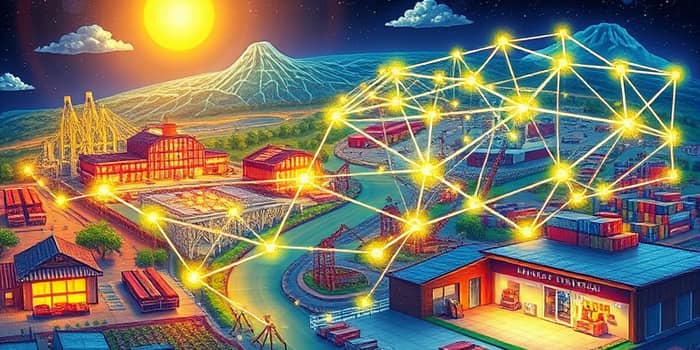
Traditional supply chains have long struggled with opacity, fraud, ethical lapses, and mounting pressure to meet sustainability goals. In this article, we explore how blockchain can revolutionize the way products move from raw materials to consumers, delivering both environmental stewardship and financial gain.
By combining cutting-edge ledger technology with real-time data integrations, organizations can foster trust, reduce waste, and unlock new revenue streams. The journey toward a transparent, resilient supply chain begins with understanding the challenges and mechanisms at play.
Decades-old logistical practices often rely on siloed databases, paper records, and manual audits. Such systems create fertile ground for counterfeit goods, hidden labor abuses, and inaccurate carbon accounting. Consumers and regulators increasingly demand higher accountability, forcing companies to reimagine their supply chain strategies.
At its heart, blockchain is a distributed ledger where each transaction is time-stamped, hashed, and linked to the previous entry. This architecture creates animmutable, decentralized ledgers for traceability that cannot be altered without consensus.
Smart contracts automate agreements: they trigger payments or alerts when predefined conditions are met. Combined with consensus mechanisms, this ensures data integrity across multiple partners without a central authority.
By integrating with IoT sensors and AI analytics, blockchain platforms capture real-time metrics—temperature, location, quality scores—and feed them into the ledger, producing an auditable, tamper-evident record.
Blockchain enablesend-to-end tracking from raw materials to consumer. Every step—harvesting, processing, shipping—records a digital fingerprint. These hashes create an unbroken chain of custody, preventing tampering and making counterfeit infiltration virtually impossible.
IoT sensors monitor environmental conditions in transit, alerting stakeholders to anomalies. For perishable goods and pharmaceuticals, this means spoilage prevention and safety assurance. Ethical sourcing and labor conditions are verifiable, allowing customers to confirm that every worker receives fair wages.
Across industries, blockchain pilots are demonstrating measurable social and environmental gains alongside profitability. Consider these case studies:
Implementing blockchain offers a trifecta of gains:
Beyond ethical imperatives, blockchain drives tangible financial returns. Companies report:
– Higher revenue from products commanding price premiums
– Reduced fines and faster regulatory approvals through auditable, tamper-evident trails
– Lower insurance premiums as risk exposure declines
– Improved shareholder perception by showcasing robust ESG performance
Blockchain is not a panacea. Success hinges on:
Thoughtful rollout, pilot testing with key suppliers, and identifying high-impact product lines are essential first steps to avoid wasted investment.
By 2026, we expect blockchain to integrate seamlessly with AI-driven optimization and IoT monitoring, ushering in predictive supply chains that proactively reroute shipments, reduce emissions, and reassure consumers with real-time product stories.
Regulators will lean on immutable ledgers for swift audits and tailored ESG mandates, while platforms like TerraLink demonstrate how full visibility becomes an industry standard rather than an exception.
Ultimately, blockchain elevates sustainability from marketing rhetoric to quantifiable reality. By embedding trust and transparency at every step, organizations can protect people and planet while unlocking new profit centers.
Leaders who embrace this technology today will define the supply chains of tomorrow—resilient, ethical, and lucrative.
References